Create Your First Project
Start adding your projects to your portfolio. Click on "Manage Projects" to get started


Circles UBI
Project type
App Design
Project Overview:
This project was a group effort with two classmates to redesign part of a Universal Basic Income (UBI) app that was being tested in rural Indonesian communities. The app, which centers around a barter system, allows users to trade goods and services using a virtual currency called Circles. Our focus was on improving the onboarding flow, specifically for stores and vendors, to make the process smoother and more intuitive.
My Role:
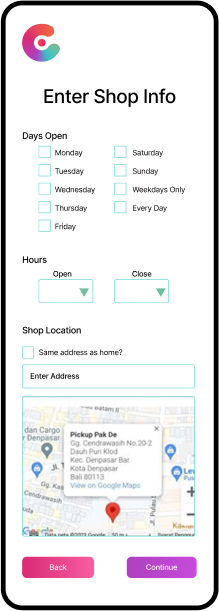
As part of the team, I was responsible for the flow that onboarded stores and vendors into the app. This included researching how best to introduce these users to the app’s barter system and ensuring that the process was easy to follow. We wanted to reduce barriers to entry and ensure that vendors could quickly understand how to start participating in the system.
Research and Process:
Understanding the Target Audience:
We conducted interviews with people living in rural Indonesia to better understand their daily life, challenges, and how they engage in barter trade. This research helped us uncover pain points that vendors and stores faced when using digital systems for bartering, and how to address these in the onboarding flow.
Wireframing and Initial Design:
We created initial wireframes for the store/vendor onboarding flow. The design aimed to make the process clear, simple, and culturally appropriate, considering the tech familiarity and internet access issues in rural communities.
User Testing:
Once the wireframes were ready, they were tested by individuals from our target audience in Indonesia. We used their feedback to identify areas of confusion, adjust language, and refine the flow. The feedback we gathered was invaluable in making the onboarding process more user-friendly.
Iterations Based on Feedback:
After testing the wireframes, we revisited the designs to incorporate the feedback we received. The revisions aimed to simplify the process further, reduce steps, and make navigation even more intuitive for vendors.
Outcome:
The final designs were shared with the company developing the app, providing them with a comprehensive set of recommendations. The opportunity to interview members of the target audience and implement their feedback was incredibly rewarding, as it allowed us to make a meaningful contribution to the app’s development. Our designs aimed to lower the barrier to entry for vendors and ensure they could quickly understand how to engage with the barter system through the app.
Key Takeaways:
User-Centered Design:
The project emphasized the importance of designing with the end-user in mind. By gathering insights from real users, we could create a flow that was more tailored to their needs.
Cultural Sensitivity:
Understanding the cultural context of the target audience was crucial. Our team ensured that the design was both culturally appropriate and easy for users to navigate, even with limited access to technology.
Iterative Design Process:
This project reinforced the value of iterative design. Testing early wireframes and revising them based on user feedback helped us refine the experience and improve usability.